TAKE CONTROL OF RESTAURANT NOISE AND REVERBERATION
Two sources feed restaurant noise, and each needs its own treatment: reverberation building inside the dining room, and noise traveling in from the kitchen, the bar, or the street. Reverberation is usually the bigger of the two.
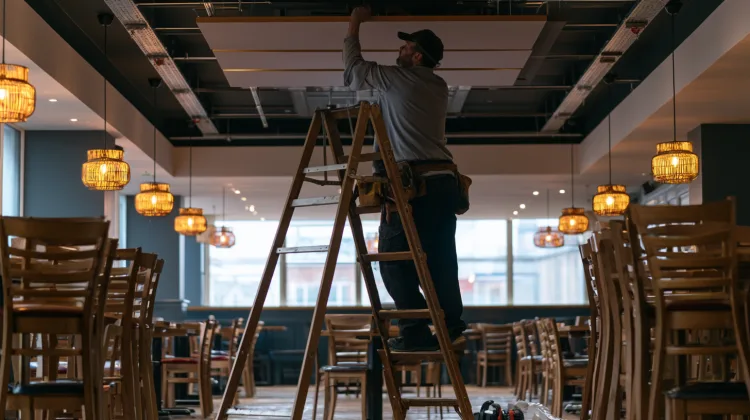
Hard surfaces cause it. Polished concrete, open ceilings, glass, and tile, with little upholstery to soften them, bounce sound back, so voices and clatter pile up and the room gets louder.
Comfortable conversation in a restaurant sits at around 60-70 dB. A packed, hard-surfaced dining room regularly hits 80 to 100 dB or more - so guests talk louder to be heard, and the room climbs higher again.
Too much noise also costs money. It's among diners' most frequent review complaints, it cuts visits short, and it makes conversation - at the table and between staff - harder, all of which hits revenue.