Serving Palo Alto & Silicon Valley - Shipping Nationwide

CONDO SOUNDPROOFING IN PALO ALTO

Condo soundproofing cuts the noise passing between your unit and the homes around it by treating shared walls, ceilings, and floors from your side. In a Palo Alto condo, you own the interior while the structure around it is shared — so every treatment goes on your surfaces, not your neighbor’s.

That ownership line shapes every condo soundproofing project. The aim is to stop as much neighbor noise as we can, working only with surfaces that belong to you.

A List of Our Services

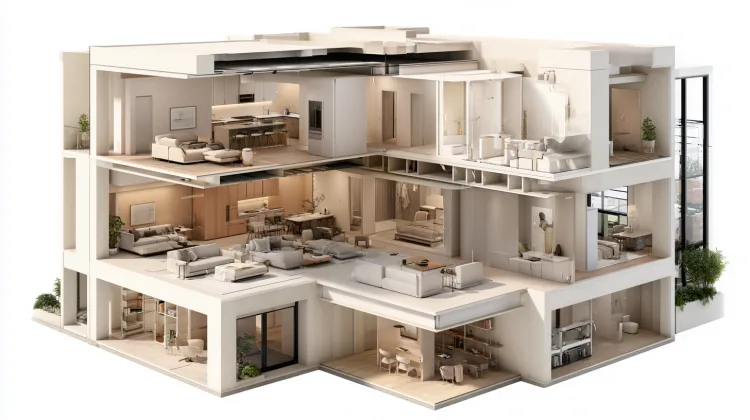
Diagram of two stacked condo units divided by a shared floor-ceiling assembly

STOP NOISE TRAVELING BETWEEN CONDO UNITS

In a condo, most unwanted sound starts with the people who share your building and reaches you through whatever divides your space from theirs. You’re free to work on your own unit, never on the one next door, which is why the treatment happens on your side.

Footfalls overhead top the complaint list. Walking, dropped items, and furniture pushed around send vibration into the shared floor-ceiling assembly, and it comes out as sound in the unit below.

Shared walls carry conversation and music. Sound from the neighbors on either side finds thin wall sections and small gaps, then spills into your rooms.

Building systems add their own noise. Drain lines, ductwork, and heat pumps running all summer pass sound from unit to unit through the framing and service chases.

Traffic piles on. Units facing Embarcadero Road or Middlefield Road take in outside noise through windows and exterior walls, on top of the neighbors.
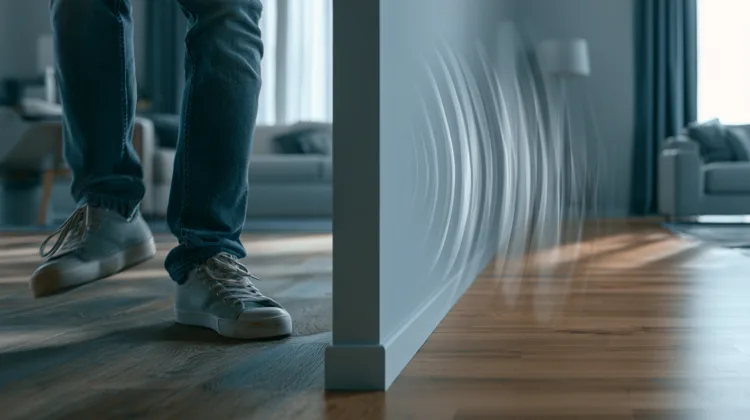

Person walking on a condo floor, creating impact noise

HOW IMPACT AND AIRBORNE NOISE MOVE THROUGH A CONDO

Two kinds of noise move through a condo, each with its own rating, and you can only treat them properly once you know which one you have. Impact Insulation Class (IIC) measures impact noise; Sound Transmission Class (STC) measures airborne noise. On both scales, a higher number means better isolation.

Impact noise begins when something strikes the building itself — a heel on the floor upstairs, for example. Decoupling and resilient isolation tame it by separating your finished surface from the structure, so the vibration has nowhere to radiate.

Airborne noise starts as sound waves in the air — a neighbor’s voice, a TV, a guitar. Added mass and sealed gaps keep those waves from making it through the shared wall into your unit.

Whatever the surface, the work happens on your side. We treat your face of a shared wall, answer upstairs footsteps by soundproofing your ceiling from underneath, and handle noise through the floor by working on the floor inside your unit.

Sheets of soundproofing drywall stacked in a room being renovated

CONDO SOUNDPROOFING SERVICES WE OFFER

Our condo soundproofing services handle both impact and airborne noise, and every one of them is installed from within your unit. Each targets a particular route neighbor noise uses to reach you.

Shared Wall Soundproofing

Shared wall soundproofing stops airborne noise from the units next to you by bringing mass and decoupling to your face of the wall. A mass-loaded barrier, a new decoupled layer, and sealed gaps push the STC up, so less voice and music makes it through.

Ceiling Soundproofing Against Upstairs Noise

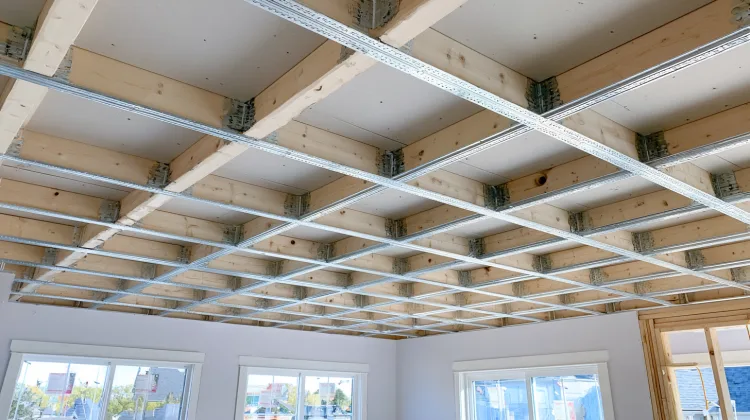
Ceiling soundproofing tackles the footsteps and thuds that fall from the unit overhead. Resilient channels or isolation clips plus extra mass separate your ceiling from the framing and lift the IIC, so less of that upstairs vibration turns into sound in your rooms.

Floor Soundproofing

Floor soundproofing deals with impact noise moving through your own floor. A resilient underlayment with added mass cuts what you send to the neighbors downstairs and helps isolate your floor from the building structure.

Sealing Doors and Windows

Sealing doors and windows shuts out sound from the corridor and the street. Solid-core doors, perimeter gaskets with door sweeps, and soundproof inserts for the windows close the openings that hallway chatter and traffic slip through.

Contemporary condo living room with an acoustically treated feature wall

WHY OWNERS PICK OUR CONDO SOUNDPROOFING COMPANY

Condo soundproofing that works starts with naming the problem — impact or airborne — and treating it the right way with nothing but the surfaces you own.

Licensed Installers, 20+ Years in Acoustics

Palo Alto Soundproofing is a division of New York Soundproofing, and our licensed installers bring 20+ years of multi-unit acoustic work. One-sided wall, ceiling, and floor work is routine for them, so your plan rests on acoustic principles, not a favorite product.

The Right Diagnosis: Impact or Airborne

Before we specify a single material, we pin down whether each problem is impact or airborne. That avoids a classic error: piling mass onto a wall to fix footsteps that really call for a decoupled ceiling.

Everything Installed From Inside Your Unit

Each treatment goes in from your side — no changes to shared structure, no visits to a neighbor’s unit. We plan around your HOA’s CC&Rs and the limits on what an owner may alter.

Acoustic Materials From Our Own Shop

We make many of our acoustic materials in-house and choose each product for the surface and the type of noise. That control lets us aim STC and IIC performance at your particular unit instead of pushing one product onto every job.

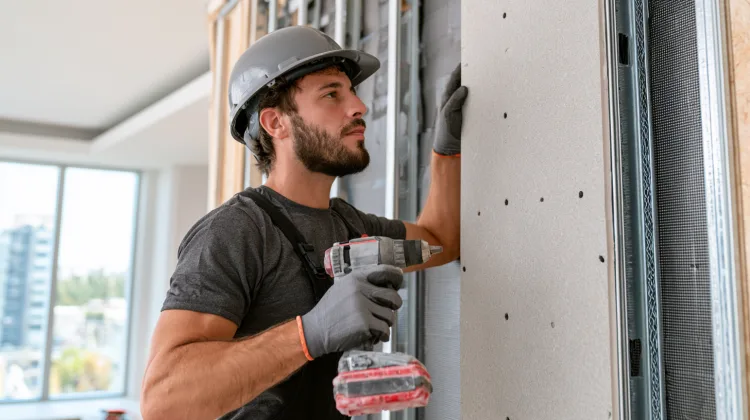
Installer fastening soundproofing drywall to a shared condo wall

OUR CONDO SOUNDPROOFING PROCESS, STEP BY STEP

Four stages take you from the first measurement to a confirmed result, so every surface gets treated for the noise it actually carries — not for a guess.

On-Site Assessment of the Noise and Its Source

We work out whether you’re hearing impact or airborne noise and which adjoining unit is producing it. Those readings become the baseline and tell us which surface to treat, and from what side.

A Design Built on STC and IIC Targets

Using the assessment, we set an STC goal for airborne noise and an IIC goal for impact noise. Measurable targets hold every surface to a clear standard instead of a hunch.

Installation, All on Your Side

The whole installation takes place within your unit, including sealing the gaps and flanking paths that would drag performance down. We schedule it to keep disruption low while you live there.

Measuring the Result

When the work is done, we take new readings against the baseline. You see the reduction your unit really gained, not just a lab number.

Condo ceiling framed with isolation clips and resilient channel before drywall

HOW MUCH QUIETER YOUR CONDO CAN GET

Condo soundproofing delivers measurable results, but how far they go depends on the noise type and on treating just your half of the shared structure — not on a “soundproof” label.

Working from one side cuts noise well, but it has limits. Since the assembly isn’t rebuilt from both units, you get a big improvement — just not the maximum a full two-sided rebuild could reach.

Shared-wall airborne noise reacts well to mass and decoupling. A decoupled mass layer plus thorough gap sealing makes neighbors’ voices and music noticeably fainter in your rooms.

Footsteps from upstairs are the toughest to control. That vibration goes straight into the structure, so decoupling and isolating your ceiling softens it but seldom erases it when only your side is treated.

Low-frequency sound sets the real-world limit. Mechanical hum and heavy footfalls produce long wavelengths that need extra mass and decoupling compared with mid- and upper-range voices.

Specialist reviewing soundproofing plans with condo owners

BOOK YOUR PALO ALTO CONDO SOUNDPROOFING ASSESSMENT

Every condo soundproofing project begins with a visit: we separate impact from airborne noise, find the neighbor responsible, and set measurable STC and IIC targets. Next comes the design, the installation, and a final check, all on your side.

📞 Call Now to set up your assessment, or Request Your Free Quote and get a condo soundproofing plan made for your unit!

Frequently Asked Questions

Can I stay in my condo during soundproofing?

Yes. Most wall, ceiling, and floor work can be phased room by room so your home stays usable. We schedule around your household and your HOA’s work hours.

Can you cut shared wall noise without rebuilding the wall?

Yes. A decoupled mass layer added to your face of the wall, plus careful gap sealing, can lift the STC while the existing wall stays in place. Voices and music from next door drop noticeably, and all the work stays in your unit.

Does my condo association have to approve soundproofing work?

Often, yes. The structure is shared and governed by association bylaws, so work must stay within what owners may change. Treatments confined to your unit are usually simplest to approve, but check your HOA’s rules before work begins.

How can I reduce footstep noise from the unit above me?

Footsteps are impact noise, and the cure is separating your ceiling from the structure. Resilient channels or isolation clips together with extra mass limit how much upstairs vibration reaches your rooms as sound.

How does impact noise differ from airborne noise in a condo?

Impact noise comes from something physically hitting the structure — footsteps overhead are the classic case — and its rating is IIC. Airborne noise travels through the air as voices, TV, or music, and its rating is STC. They need different treatments, and fixing one won’t automatically fix the other.

Will condo soundproofing help if only my unit is treated?

Yes. Working on the shared walls, ceilings, and floors from your side makes a real dent in neighbor noise. Because the structure isn’t rebuilt from both units, the result is strong but has limits — the target is a livable home, not total silence.

Palo Alto Soundproofing

Soundproofing Specialists for Palo Alto & Silicon Valley

Home offices, music rooms and home studios, recording studios, conference and video-call rooms, offices, restaurants, bars and clubs, houses of worship, school auditoriums - we build custom sound environments around the way each space is actually used.

View All Services

Start your project

Tell us about your space and we will get back to you

Start with a few basic details:

Rather talk by phone? (877) 999-2201

Additional info (Optional)