
Serving Palo Alto & Silicon Valley - Shipping Nationwide

HVAC SOUNDPROOFING IN PALO ALTO

HVAC soundproofing cuts the noise a heating and cooling system pushes into your living and working spaces. It deals with two separate paths: airborne sound that moves through ducts and grilles, and structure-borne vibration that the equipment passes into floors, walls, and ceilings.

Across Palo Alto, the Peninsula, and the South Bay, Palo Alto Soundproofing diagnoses and treats HVAC noise — duct lining, equipment isolation, mechanical room treatment — then tests the result. Farther away? Book a virtual consultation; our products ship nationwide.

A List of Our Services

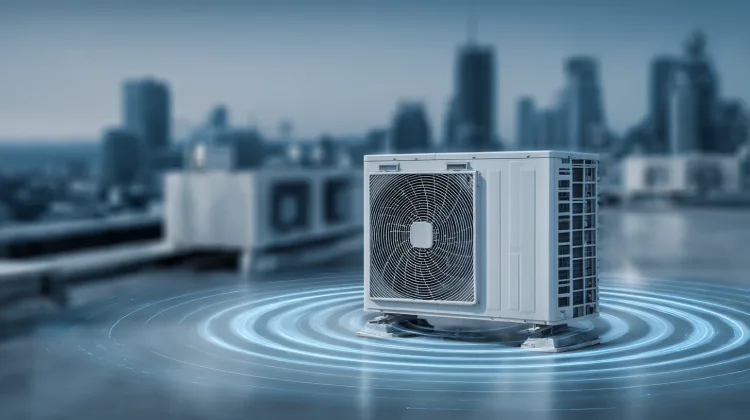
Rooftop condenser unit with sound waves radiating from its base

WHAT HVAC SOUNDPROOFING ACTUALLY COVERS

HVAC soundproofing lowers system noise by dealing with both routes it can take into a room — through the air and through the structure.

Airborne noise rides on the moving air and escapes through duct openings — the hum, hiss, and rush you hear at a vent. The fixes are duct lining, extra mass on the duct walls, and baffles or silencers in the run.

Structure-borne noise begins as vibration in the equipment. It travels through framing and slab until a distant wall or ceiling turns it back into sound. The cure is isolation — springs, pads, or hangers that keep vibration out of the structure.

Most HVAC complaints involve both paths. Treat just one — say, lining the ducts while the vibrating unit stays bolted down — and the room is often nearly as loud as before.
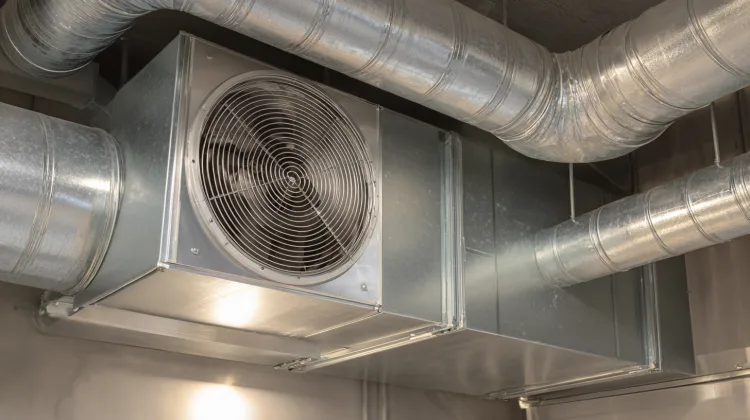
Indoor air handler unit connected to metal ductwork

WHERE HVAC NOISE COMES FROM

HVAC noise starts at a few predictable points in the system, and finding the right one decides the fix. The usual suspects:

The outdoor condenser or compressor gives off a low-frequency hum plus mechanical noise, carried both through the air and into whatever it sits on. On many Palo Alto lots, that unit lives in a narrow side yard near a bedroom window or a neighbor’s fence.

The blower or air handler creates noise right where air enters the ductwork. From there, the sound rides the ductwork to each register the system feeds, room after room.

Ductwork is the delivery route. Moving air, turbulence at elbows, and sound carried along the sheet metal bring equipment noise into rooms far from the unit — and rigid duct connections pass vibration along, too.

Structure-borne vibration appears when equipment is bolted straight to a floor, slab, or joists. It moves through the building and comes back out as sound from walls, ceilings, and floors in other rooms.

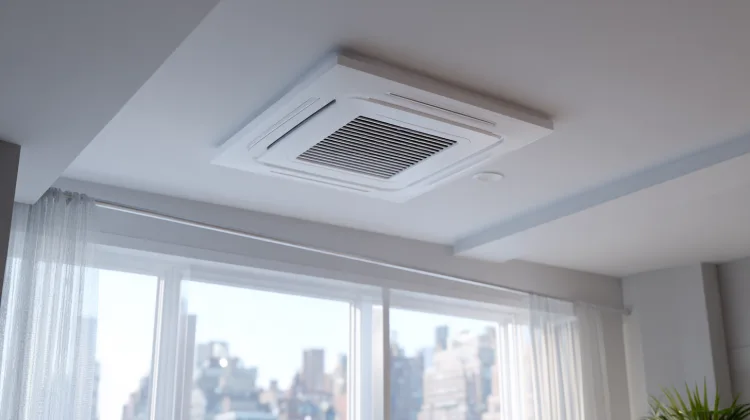
Ceiling air vent in a quiet modern apartment interior

HVAC SOUNDPROOFING SERVICES WE DELIVER

Real HVAC noise control covers the airborne route, the vibration route, and the room housing the equipment. Book any of the services below on its own, or combine them into one complete treatment.

Acoustic Duct Lining & Ductwork Soundproofing

Ducts are the main highway HVAC noise uses to reach occupied rooms. We install acoustic duct liner to absorb sound moving inside them, add mass to thin duct walls where it helps, and build in lined elbows and baffles — every lined 90-degree turn knocks down a bit more of the noise passing through.

HVAC Equipment Vibration Isolation

Isolation keeps equipment vibration out of the building’s bones. Units go on spring isolators or isolation pads, or hang from isolation hangers, which decouples them from floors and framing so the vibration goes nowhere. It’s the step most DIY kits skip.

Soundproofing Mechanical & Equipment Rooms

A mechanical room gathers HVAC noise in one spot, then leaks it next door — a familiar issue in mixed-use buildings and office suites. We treat its walls, ceiling, door, and duct penetrations so the noise stays at the source.

Condenser, Heat Pump & Outdoor Unit Noise Control

Outdoor condensers, compressors, and heat pumps push noise toward bedrooms and neighbors; Palo Alto even limits its instant heat pump permit to units rated under 65 dBA. We quiet units with barriers, ventilated enclosures, and mass-loaded materials that never starve them of airflow.

HVAC technician standing beneath overhead ductwork

WHY WORK WITH OUR PALO ALTO HVAC SOUNDPROOFING COMPANY

What makes our HVAC work different: we treat the airborne path and the structure-borne path together, so the system is actually quieter in the room — not just on a spec sheet. Here’s what that means for your project.

Certified Technicians, a Decade-Plus in HVAC Noise

Our technicians bring more than ten years of hands-on work in mechanical and HVAC noise control. They track down the real source before touching anything, which avoids the classic mistake of lining ducts when the true culprit is a vibrating unit.

Airborne + Structure-Borne Noise, One Project

Both paths get handled in a single project. That avoids the all-too-common letdown: a lined duct or a boxed-in unit that’s still noisy because nobody isolated the vibration in the structure.

Trusted by Leading Brands & Organizations

Sony, Microsoft, Uber, WeWork, and YouTube have brought our team in for acoustic projects — a track record built in buildings where mechanical noise affects people and their work.

Local Site Visits & Virtual Consultations Nationwide

We offer free on-site assessments in Palo Alto and nearby cities like Menlo Park, Los Altos, and Mountain View, plus virtual consultations everywhere else. Our products ship nationwide, so remote projects get the same solutions with our guidance.

Technician measuring noise at a duct with a sound level meter

HOW WE APPROACH HVAC SOUNDPROOFING

Every job begins with measuring the noise and pinning down where it comes from, so the treatment targets the actual problem rather than a guess.

Step 1: Noise Measurement & Source Diagnosis

We inspect the system in person or over video and take measurements to tell whether the noise is airborne, structure-borne, or both — and where it starts. That answer decides which treatments you need.

Step 2: Tailored Solution & Written Proposal

You get a written plan listing what’s needed — duct treatment, isolation, room work, or outdoor measures — plus materials, expected results, and cost. Work starts only after you’ve seen it all.

Step 3: Installing Liners, Isolators & Enclosures

Our crew installs the duct lining, isolators, room treatment, and outdoor enclosures exactly as specified, never at the expense of the airflow your system needs. Work is scheduled to keep disruption low.

Step 4: Final Testing & Follow-Up

Once the work is done, we measure again and compare against the original readings to confirm the reduction. Follow-up support and maintenance keep the treatment performing.

Homeowner and HVAC contractor talking beside an outdoor condenser

BOOK AN HVAC SOUNDPROOFING ASSESSMENT TODAY

Request a free assessment of your HVAC noise and get a written plan for both the airflow and the vibration behind it. We cover Palo Alto, the Peninsula, and the South Bay, and our soundproofing products ship nationwide.

📞 Call Today - (877) 999-2201 | Get Your Free Quote

Frequently Asked Questions

What does HVAC soundproofing cost in Palo Alto?

Price depends on where the noise starts, how much ductwork needs treatment, whether vibration isolation or mechanical room work is involved, and which materials fit the job. After the assessment, a written proposal gives you an exact figure for your system.

Is HVAC noise airborne, structure-borne, or both?

Usually both. Air rushing through ducts and grilles is airborne; vibration the equipment sends into the building is structure-borne. You normally need to treat both for lasting quiet, so we always pin down the source first.

How do I quiet a noisy outdoor AC or heat pump?

Sound barriers, ventilated enclosures, and mass-loaded materials block airborne noise while preserving airflow and access; isolators stop hum traveling into a roof or deck. Placement counts too: Palo Alto’s noise ordinance generally caps residential equipment at 6 dB above local ambient at the property line.

Will soundproofing my HVAC unit cut its airflow?

It shouldn’t. With the right design, duct liner, lined baffles, isolators, and ventilated enclosures lower noise while keeping the airflow and clearances the system depends on. Choking airflow would hurt performance, so we avoid it.

Why does my HVAC shake the floor or walls?

That’s structure-borne noise. The equipment is fastened directly to the building, so its vibration travels through floors and framing and reappears as sound in other rooms. The fix is isolating the unit on springs, pads, or isolation hangers — treating the ducts won’t touch it.

How can I quiet noisy ductwork?

Start inside: acoustic duct liner absorbs the sound moving down the duct. Thin duct walls get added mass, and lined elbows or a baffle box take care of the rest. Every lined 90-degree turn trims a little more noise from the air stream while the air keeps flowing.

Palo Alto Soundproofing

Soundproofing Specialists for Palo Alto & Silicon Valley

Home offices, music rooms and home studios, recording studios, conference and video-call rooms, offices, restaurants, bars and clubs, houses of worship, school auditoriums - we build custom sound environments around the way each space is actually used.

View All Services

Start your project

Tell us about your space and we will get back to you

Start with a few basic details:

Rather talk by phone? (877) 999-2201

Additional info (Optional)